
Welcome to Slydap
Get Involved, Explore & Redefine
- Share your momentsPosts, photos, polls and what’s on your mind.
- Watch videosSkits, music and stories from people around you.
- Chat with friendsMessages, voice notes and group chats.
- Join groups and pagesFind your people and the things you love.
Happening on Slydap
Public posts
🖥️ Mini Network Rack Setup – Compact, Powerful & Organized!
A well-designed mini rack can deliver enterprise-level performance in a small footprint. By combining a router, network switch, patch panel, mini server, storage, and proper cable management, you can build a reliable, scalable, and easy-to-maintain network for home labs, small businesses, or branch offices.
Whether you’re a CCNA/CCNP student, IT professional, or homelab enthusiast, a clean rack… See more
🖥️ Mini Network Rack Setup – Compact, Powerful & Organized!
A well-designed mini rack can deliver enterprise-level performance in a small footprint. By combining a router, network switch, patch panel, mini server, storage, and proper cable management, you can build a reliable, scalable, and easy-to-maintain network for home labs, small businesses, or branch offices.
Whether you’re a CCNA/CCNP student, IT professional, or homelab enthusiast, a clean rack setup makes troubleshooting easier and improves overall network efficiency.
💬 What’s the first device you would install in your mini rack—router, switch, firewall, or server? Let us know in the comments!
#education #Networking #technology #fblifestyle #fyp See less




Changed profile picture



 Michael, Support and 1 other
👍3
5

🔥🔥 HOT VIDEOS DROPPING TODAY! 🔥🔥
Get ready for an exciting lineup of breathtaking African cultural experiences! 🌍✨
You definitely don't want to miss any of these! 🔥
🔓 SUBSCRIBE NOW & GET EXCLUSIVE ACCESS!
 Michael
🤗1
2
At sixteen, a Hawaii high school student built an ocean filter out of coconuts. It could capture plastic and sunscreen pollution floating on seawater.
But Vera Wang spotted a problem with her own invention: removing pollutants from the ocean did not make them disappear.
What happened to the pollution after the filter collected it?
That question led her to a discovery involving fungi living inside coconut husks, and to award-winning research at the… See more
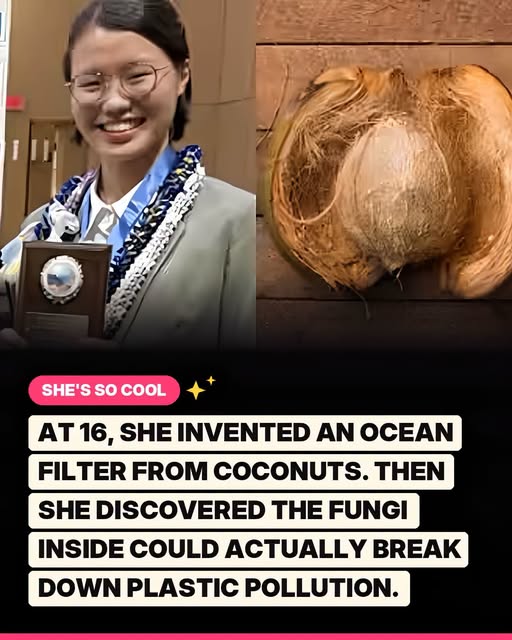
At sixteen, a Hawaii high school student built an ocean filter out of coconuts. It could capture plastic and sunscreen pollution floating on seawater.
But Vera Wang spotted a problem with her own invention: removing pollutants from the ocean did not make them disappear.
What happened to the pollution after the filter collected it?
That question led her to a discovery involving fungi living inside coconut husks, and to award-winning research at the University of Hawai?i.
Vera was a sophomore at Kaiser High School in Honolulu when she began developing her filter. She wanted materials that were locally available and biodegradable. In Hawaii, coconut trees were everywhere.
She gathered coconuts from an Oahu wetland where she volunteered and taught herself to weave coconut leaves. Inspired by the traditional Hawaiian coconut-leaf hat, she fashioned a floating structure from coconut byproducts.
It could capture microplastics and sunscreen from surface water. But Vera was already thinking beyond the first stage of cleanup.
She had learned that coconut fibers contain pores through which air and water can move, creating a possible home for microorganisms. What if the fungi naturally growing there could do more than sit inside a filter?
Working in Anthony Amend’s laboratory at the University of Hawai?i at M?noa, alongside marine biology graduate student Kaylee Christensen, Vera investigated the fungi found in coconut husks.
Their experiments found that some could biodegrade plastic and sunscreen. Genetic testing suggested that certain fungi might even represent species not yet characterized in major reference databases.
In 2026, Vera won first place in microbiology at the Hawai?i State Science and Engineering Fair, placed third overall and received additional awards. She qualified for an international science competition.
By November, the eighteen-year-old had graduated from high school and started her first year at MIT. She and her mentor were preparing a manuscript about the research.
Her coconut filter is still research, not a proven solution to ocean pollution at scale. But the idea behind it is striking: use an abundant natural material to collect contaminants, then investigate whether the organisms living in that material can help decompose them. See less
 Matthew
👍1
2
There’s more on Slydap
Create an account to see everything, react, comment and follow people.